When Rachel Andresen founded Youth For Understanding in 1951, her ambition reached beyond the logistics of sending students abroad. She wanted to rebuild something far more fragile: trust among peoples who had learned to fear one another. The Second World War had fractured not only nations but the human imagination itself. Societies had to relearn how to see others not as threats, but as partners in rebuilding a shared future.
YFU Founder Rachel Andresen’s Legacy at 75 Years
by Gregory Matheson
by Gregory Matheson
Learning Democracy, Living Humanity
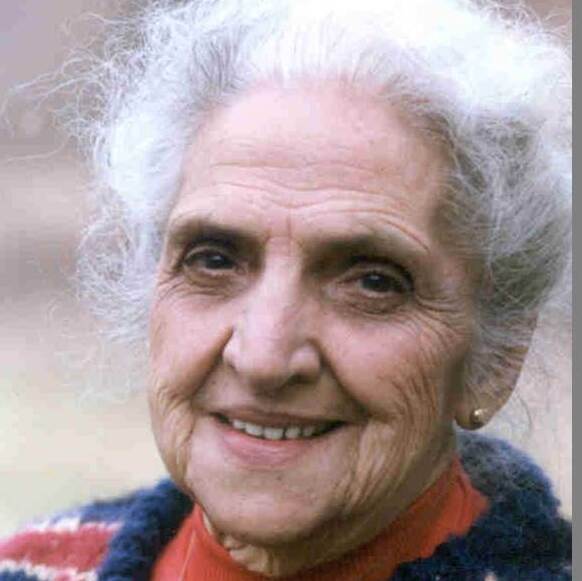
Andresen’s founding idea was straightforward but bold: that young people, through the act of living inside another community, could learn the habits of cooperation that sustain peace. The first exchanges between the United States and Germany were modest in number but vast in symbolism. They carried the hope that reconciliation could happen not through speeches or agreements, but through daily life - a meal shared, a lesson understood, a difference accepted.
Education as the framework of democracy
Democracy depends on citizens who are capable of empathy and reasoned cooperation.
It is hard to overstate just how important these simple concepts are in today's world and their absence drives our modern societies to dark places. We so desperately need to cultivate these traits in our youth and in our communities around the world and they cannot be imposed through policy or ideology; they must be learned through experience. This is where youth exchange becomes more than an educational initiative, it is a form of democratic learning.
For a student (particularly a teenager at the most naturally formative stage of their young lives) stepping into a host community means learning how culture shapes perception, how disagreement can be navigated respectfully, and how trust is built slowly through dialogue. It is the learner’s first real encounter with pluralism, not as a theory, but as a condition of life. The experience teaches that identity and difference coexist, that listening often matters more than winning a debate, and that understanding is stronger than certainty.
For a host family, opening their home to a young person from abroad is equally formative. It asks generosity, patience, and the willingness to see one’s own culture through new eyes. It turns ordinary domestic life into civic practice, a space where respect, compromise, and learning unfold side by side. These are the disciplines that sustain democratic societies long after the exchange year ends.
To a greater or lesser degree, the whole community and industry of international education which arose from the rubble of the second world war has been continuously shaped by this idea of fluid exchange and learning across borders - in service of innovation, shared prosperity and Peace. Above all, an investment in international and intercultural education is an investment in Peace.
A community that lives its values
Rachel Andresen understood the power of creating connections and friendships across and beyond borders. It is at one level a political act certainly, but it is also deeply personal and quintessentially human - to forge bonds and to recognise shared humanity, even in the most challenging of circumstances, even in times of war and conflict. Humanity is at its finest in these moments, but also its most primary.
Friendship and belonging is what young people crave above all else - it is the motor which drives engagement in the YFU community around the world. That was as true in 1951 as it is 2026 and we work to support these connections and to live them.
The worldwide network of YFU volunteers and educators continues this work quietly, day after day. They prepare families, guide students, and support communities as they learn to live with diversity in practical, human ways. Their effort is both educational and civic, building conditions in which understanding can take root. Across hundreds of communities, these volunteers form a democratic learning environment that links people who might never otherwise meet.
The very existence of this network is a reminder that democracy is not maintained purely through institutions. It must also be renewed through relationships, through citizens acting together in trust, goodwill and in friendship. YFU’s people have modeled that form of civic engagement for three generations, turning the mechanics of exchange into the daily exercise of shared humanity.
The political meaning, then and now
In 1951, welcoming youngsters from postwar Germany in the United States required courage, political as well as moral. It meant confronting public skepticism and confronting grief still fresh from the conflict. Yet leaders supported it, recognizing that the stability of democratic nations rested on the long-term education of their citizens and the humanization of their former enemies. The exchanges were, in that sense, a political project, a deliberate act to make democracy durable through understanding.
Today, we live in a world where the divisions are less visible but deeply felt: mistrust between cultures, misinformation that distorts truth, and populism that exploits fear of the unfamiliar. At a time when problems spill easily across borders - climate change, inequality, migration - the ability to collaborate globally is no longer optional. It is essential to our shared survival.
Modern policymakers face a similar imperative to those who launched exchanges seventy-five years ago: to invest not only in economic or technological strength, but in the moral and civic capacities that allow societies to cooperate. Funding youth exchange is not charity; it is a practical investment in democratic resilience.
Democratic education as the practice of humanity
Democratic education, as YFU practices it, is the lived transmission of values: respect, curiosity, fairness, dignity, and shared responsibility. It teaches that democracy is not simply the structure of government; it is a way of relating to others. Every exchange, in this sense, is a small civic experiment that humanizes what politics often abstracts. It replaces ideology with experience, reducing fear through familiarity.
YFU’s strength lies in creating spaces where these values are not preached but practiced. Students return home aware of complexity but also of common ground. Host families gain a broadened sense of belonging. Communities benefit from citizens who have learned to balance conviction with respect. In these quiet transformations, one sees what Rachel Andresen understood so well: that the everyday work of understanding is also the everyday work of democracy.
Seventy-five years later
More than seven decades since its founding, Youth For Understanding continues to embody this relationship between education and democracy. In a time when voices of division grow louder, the YFU community offers proof that openness and empathy remain achievable. It demonstrates that the most sustainable peace is built not from fear, but from the steady experience of cooperation.
Each exchange today carries the same purpose that inspired the first: to form individuals who can think beyond borders and act with integrity in an interconnected world. The program’s worth lies not in statistics - though with many millions of lives touched over 75 years, these numbers are significant - but in what it leaves behind, namely young people confident in their capacity to engage difference thoughtfully, and families who discover in that process that they, too, have learned something essential about their own humanity.
The continuing work of peace
Our endurance - and that of everyone working in the space of international education - shows that the education of understanding is neither sentimental nor secondary, it is the groundwork of peace. Every year and in every country where these exchanges take place, it renews the simple but transformative act at the heart of its mission: bringing strangers together until they are no longer strangers.
Rachel Andresen believed that peace would depend on human beings learning to live democracy, not just vote for it. Seventy-five years later, that belief remains salient - our modern world and our way of life requires belief in its founding principles. As long as young people are willing to cross borders in search of understanding, and as long as families and communities are ready to welcome them, there is reason to hope.
This is the continuing work and worth of Youth For Understanding: to keep alive the practice of humanity - one exchange, one conversation, one generation at a time. Happy Birthday Rachel, and thank you for your dream which is as relevant as it was 75 years ago.
Gregory Matheson,
Secretary General Youth For Understanding