What Remains After We Come Home?
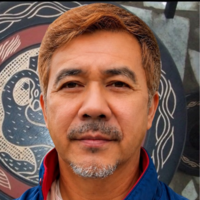
A Story by Kosuke Ida
Years ago, a group of teenagers left Japan to spend a year as exchange students in a foreign country. We were young enough to become immersed in another family, another school, another way of life—and old enough to know that we were entering a world different from the one we had known.
Before we went to our host families, we spent about a week in Michigan, staying in a student dormitory that was empty for the summer. The orientation was for the Japanese YFU exchange students who had come from Japan. For that brief period, we were still together, sharing the anticipation—and perhaps some of the uncertainty—of what was about to begin.
As we were leaving Ann Arbor for our host families, I was about to board the bus to Detroit Airport when Gene Hashley, one of our YFU orientation group leaders, caught my eye “Remember the yellow sunglasses!” That was his last reminder.
I was about to enter American life for real. I did not fully understand it then, but those yellow sunglasses would stay with me—not as a warning against being biased, but as a reminder that what I saw would always be filtered through the assumptions I had brought with me. Then we left Ann Arbor and went our separate ways, each entering a different American family and community.
At the time, the obvious challenge seemed to be leaving home. Would we understand the language? Would we be able to fit into another family? Would we find our place in a society whose customs and assumptions were different from ours? But looking back many decades later, I wonder whether those were only the first questions. For some Japanese YFU exchange students, the more difficult transition may have come later. It may have been coming home.
Returning Home Was Not Simply Coming Back
Coming home sounds simple. You return to your family, your school, your language, your friends, your familiar streets. But the person who returns is not necessarily the same person who left. During an exchange year, a teenager does not simply visit another country. A YFU exchange student enters another family and another society and, for a time, lives inside them. And that can create something unexpected: another place inside oneself.
For a young person from Japan in my generation, this could be particularly complicated. Japan was relatively homogeneous, with less everyday exposure to different languages, backgrounds, and ways of expressing oneself than many societies experienced elsewhere. Social conventions and expectations could be strong. This is not to say that other societies have no boundaries or difficulties with difference. They do. But the experience of returning to Japan after a year of deep immersion in another society could create a particular tension. You had learned to live somewhere else. Then you came home. And suddenly, the “other place” you had discovered inside yourself had to find a place within the society you had returned to.
I eventually discovered that coming home could also mean returning to the place I had left behind. I returned to Louisiana for the first time when I was not yet thirty, about eight years after my exchange year. The family had changed. My little host sister was no longer the little girl I remembered. My host brother was now approaching the age I had been when I first arrived. My little host sister was now almost grown. l found her happily surrounded by two young men—my host brother and a new YFU exchange student from Europe. I remember realizing that while my own exchange year had ended, the YFU story in that family had continued.
My little host sister had always been hopeless at keeping her room tidy. Whenever my host mother finally lost patience and ordered her to clean it, my little host sister would put on a dramatic show of tears, crying that nobody loved her and calling for my help. I knew perfectly well that much of it was an act. But I could never quite ignore her. So I would help her sort through the chaos. Once the room was more or less under control, she would climb onto her bed and ask me to read something to her. I would begin reading aloud, thinking I was helping her. But two or three times on every page, she would stop me. “No. Say it this way.” She would correct my pronunciation. Looking back, I realize that my little host sister was my best “English teacher”—not from a classroom, but from the floor of her messy bedroom and the edge of her bed. I thought I was helping her but in fact, she was helping me.
Then, on a Sunday, I went to church with my host family, just as I had during my exchange year. More than a hundred people were there. The organ stopped, and the church became almost completely silent except for an occasional cough. The pastor stepped to the pulpit. He had taught me Bible class during my YFU exchange year. His first words were addressed to me: “It really is a good day today. Kosuke, how many years has it been since you came home?” “Eight years.”
He was speaking directly to me, but he was doing so from the pulpit, in front of everyone. Perhaps he was simply happy to see me back. Perhaps he wanted the congregation to share in that happiness. For a moment, the eight years between my exchange year and that Sunday seemed to disappear. I had come home eight years earlier. But coming home had not erased the place I had left behind.
The Invisible Value
So what remains after we come home? Not necessarily a qualification. Not necessarily a career. Not even necessarily fluency in another language. Some of what remains may be almost impossible to measure. It may be the ability to listen before judging, to recognize that the same words can mean different things to different people, to notice when communication is beginning to break down, and to understand that disagreement does not necessarily mean rejection.
Sometimes, it may be the ability to step into the space between two people and help them find another way to understand one another. This is one reason I have come to think that the value of an exchange cannot always be measured at the moment the student returns home. Some things take decades to become visible.
“They had experienced difference and lived it.”
— Dr. Rachel Andresen
Dr. Rachel Andresen, founder of Youth for Understanding (YFU) understood something fundamental about young people. An exchange was not simply about acquiring knowledge of another country. It was about experiencing difference directly—and living with it. That experience can quietly become part of the way a person moves through the world.
The Exchange Student Was Not Alone
An exchange student may sometimes be remembered as the person who went abroad. But the exchange was never a one-way experience. The student entered a host family’s life. The host family entered the student’s life. Schools, teachers, volunteers, friends, neighbors, and communities became part of the experience.
And real life was not always easy. I know of a Japanese exchange student who had to leave a host family because people in the host community strongly opposed Japanese whaling. The student suddenly found himself confronting an issue that had little to do with the comfortable image of international friendship. Another Japanese exchange student lived with a cattle-farming family and wondered whether the family had welcomed the student as a member of the family—or partly as an extra pair of hands.
These experiences matter. They remind us that intercultural understanding is not created by avoiding disagreement. It is created by living through difference. A host family is not a museum of another culture. It is a family. There is warmth, expectation, misunderstanding, generosity, disagreement, humor, and sometimes frustration. That is precisely why the experience can become real.
The Invisible Trust of Being an Exchange Student
There is another dimension to the exchange experience that is difficult to see from the outside. Being a YFU exchange student can carry a certain kind of recognition. But I do not mean status or superiority. I mean something closer to trust.
Every generation of exchange students inherits a certain amount of goodwill created by those who came before them—students, host families, schools, volunteers, and communities. When a former exchange student enters a new community, that history may quietly travel with them. You may be welcomed because someone else once crossed the same bridge. You may be trusted because generations of people have learned that opening a door to an exchange student can lead to a meaningful relationship. The student is never completely alone.
When the Invisible Value Becomes Visible
Sometimes, thirteen years later from my first visit, something happens that makes the invisible visible.
Because my host brother’s wedding invitation reached late, there were only five days left before the wedding. I looked at my wife. “We can still make it. Shall we go together?” “Of course.” So we went.
The wedding was held in a magnificent church in Lafayette. As soon as we entered, my host parents spotted us. “Kosuke!” That was all my host father said. I introduced my wife to my host mother. She took my wife’s hand and led us to our seats.
The ceremony began. At the front of a line of men standing at the altar was a broad-shouldered man waiting to welcome the bride as she entered with her father. From where we were seated, I could see him only from a distance. Yet I knew him immediately. He was my host brother. I had known him as a boy.
At the reception, I hardly had a chance to speak with my host brother. That was only natural. He was the star of the evening. My poor wife, meanwhile, had been plunged headfirst into a sea of my exchange-year memories. We were served a variety of Cajun dishes. My wife looked at one of them curiously. “What is this? It’s delicious.”“Catfish.” I think I could see it in her face: this was becoming her own Louisiana experience.
When the reception ended, the newlyweds left for their honeymoon. Through the window of the limousine, I caught one last glimpse of my host brother. His face was calm. But there was something in his eyes—a gentleness I recognized from the boy with whom I had once shared meals, a home, and everyday life. His eyes seemed to say: “I knew you would come.”
Then we returned to the hotel. My host parents were staying there too. They had checked into the connecting room next to ours because they planned to drive back to Baton Rouge with us the following day.
That evening, back at the hotel, my wife’s kimono became a source of fascination for my host mother. The journey had been rushed. Our connecting flight in Houston had been delayed, and my wife had not had enough time to change into the kimono she had hoped to wear to the wedding. As a kimono specialist, she had very much wanted to attend the wedding in kimono.
But now there was finally time. My host mother’s eyes lit up with curiosity. “Boys, out!” She sent my host father and me out of the room and stayed with my wife to help her put it on. When they finally came out, the kimono seemed to fit my tall host mother perfectly. My wife had entered my host family’s world that day. Now, in a small way, my host mother had stepped into hers.
That moment stays with me. Not because it proved that I had been a successful exchange student. Not because I had learned another language. But because something that had begun when I was a teenager was still alive decades later.
The exchange year had ended. The relationship had not.
What Technology Cannot Give Us
We now live in a world very different from the one in which I became a YFU exchange student. Twenty-first century technology can bring us extraordinary knowledge about the world. But knowledge is not the same as experience. Information is not the same as human connection.
Technology can bring the world to us. But only people can invite us into their lives. That may be one reason the original idea behind YFU remains so relevant. Young people can experience difference deeply enough that it changes how they see themselves, other people, and the world.
“Youth is our future.”
— Dr. Rachel Andresen
YFU has expressed this vision across generations in different ways, but the essential idea remains: an exchange can change not only what young people know, but how they move through the world.
“We empower citizens of one world.”
That is not simply a slogan for an exchange program. It is a challenge.
What Remains?
The visible journey lasts a year. The invisible journey can last a lifetime. Perhaps that is why the question is not simply: What did you learn during your exchange? It is: What remained after you came home? Maybe it remained in the way you listen. Maybe in the way you work with people from different backgrounds. Maybe in the courage to question an assumption you once took for granted.
And perhaps, somewhere in the world today, under another sky, someone is still looking for understanding. It could be in a meeting room, a conference hall, a laboratory, a classroom, a supermarket, a workplace, a community, a family home—or anywhere people are trying to understand one another.
Someone may be thinking: Why don’t they understand? Why won’t they understand? Why don’t they even try to understand? And perhaps, without thinking about it, you step into the space between them.
You may recognize where the communication has stopped working. You find another way to explain. You change the path of the conversation. And somehow, the tension begins to dissolve. Others may see only that you stepped in—and that a peaceful solution emerged. But you may know where you learned to do it. And if someone asks where you learned it, perhaps there is a simple answer: “I was a YFU exchange student.”
That experience is still part of who you are. It is not simply something that happened years ago. It is part of what you carry with you into the world. And perhaps that is one of the most enduring gifts of an exchange experience: to have the courage to enter the space between people, to help understanding move forward, and to discover that what once seemed invisible can become a driving force for mutual understanding and respect.
That is something worth carrying with pride.